
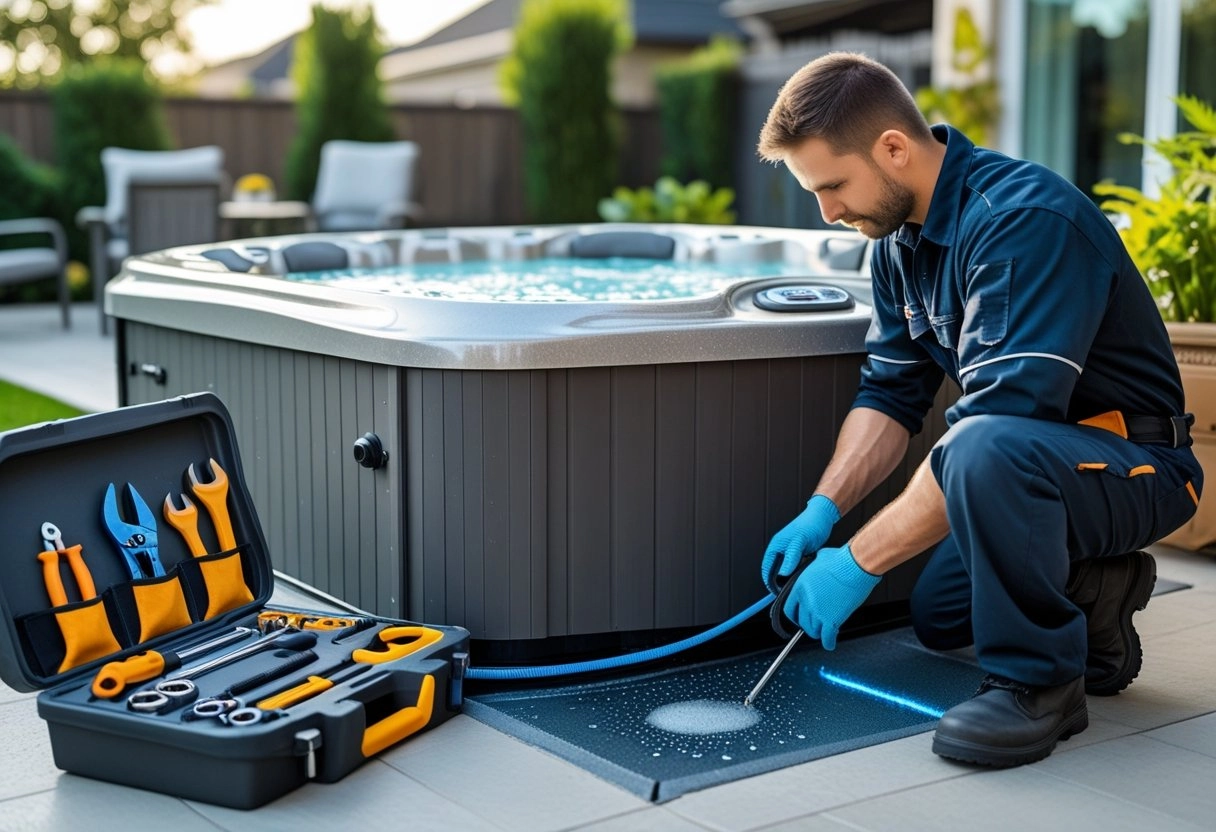
A leaking hot tub doesn’t have to mean expensive service calls or weeks of downtime; you can often locate and fix the problem yourself with a clear method and the right tools. Start by watching how and where water escapes, isolate the likely systems (plumbing, shell, fittings), and test each area systematically to find the leak quickly.

This guide walks you through spotting symptoms, common causes, prepping the tub, step‑by‑step plumbing and shell repairs, testing the fix, and simple prevention so your spa stays watertight. Follow the practical steps here and you’ll restore your hot tub’s performance without guesswork or unnecessary costs.
Identifying Hot Tub Leaks

You can spot most hot tub leaks by watching water loss patterns, checking visible plumbing, and listening for unusual sounds. Prioritize where water appears, how fast it drops, and whether the pump runs dry or loses prime.
Common Signs of a leak
Look for consistent water level drops beyond normal evaporation — more than 1–2 inches per week indicates a leak. Puddles or damp soil around one side of the tub point to a localized leak in nearby fittings or equipment.
Air in the circulation system, gurgling from jets, or loss
of heater/pump prime suggests an internal plumbing leak or a cracked manifold.
White calcium streaks or mineral deposits on fittings often mark slow leaks.
Also watch for higher electrical bills; the system may run longer to maintain
temperature when it loses water.
Visually inspect the cabinet and skirt for swelling, rot, or
damp insulation. These signs often mean the leak has been present long enough
to damage the shell or frame.
tools for leak detection
Use a garden hose and bucket for simple tests: isolate sections of plumbing and run water to see where it appears outside the system. A dye tablet or food coloring helps trace leaks in the shell or around jets without altering water chemistry.
Carry a flashlight and a small mirror to inspect under panels and inside pump bays. A wet/dry vacuum helps remove standing water during repairs and can test seals by creating suction. Consider a pressure gauge for air lines and a simple pressure tester for plumbing loops; these show drops that indicate leaks.
Electronic leak detectors and listening sticks amplify sound from running water behind panels. Thermal imaging cameras reveal cooler wet spots in insulation or framing. You don’t need every tool; pick the ones that match the suspected leak location.
inspecting internal components
Remove access panels and cut minimal insulation to expose the pump, valves, unions, and manifolds. Check all unions and threaded fittings for hand-tightness and hairline cracks; tighten or replace soft O-rings and worn gaskets first.
Examine the pump housing and seals for oil, grease, or clear weeping; a weeping shaft seal often first shows as dampness around the pump base. Inspect heater canister and pressure switches for corrosion or mineral buildup that can cause micro-leaks. Trace PVC runs for hairline cracks, especially at elbows and factory welds.
Run the system with panels removed and watch for drips while someone operates each jet and switches pump speeds. Document exact leak locations and photograph them before disassembly to ensure correct part replacement.
cause of hot tub leak

Leaks usually come from a few specific places: plumbing connections that loosen or crack, seals and gaskets that wear out, and structural damage to the shell. Identifying the exact source quickly saves water, prevents equipment damage, and lowers repair cost.
plumbing joint issues
Plumbing joints include PVC fittings, unions, and flexible hose clamps that connect pumps, heaters, and jets. Over time thermal cycling and vibration loosen threaded unions and stress solvent-welded PVC joints. You’ll often find slow drips at the base of a union, water pooling under the equipment pad, or wet drywall near the cabinet.
Inspect unions by hand-tightening (power off) and checking for cracked or split union nuts. For glued joints, look for hairline cracks or damp residue along pipe runs; pressure from pump cycles can force water through tiny fissures. Replace damaged PVC sections, re-glue solvent joints with proper primer/solvent cement, and swap brittle hoses and clamps for reinforced, UV-resistant replacements.
worn seals and gaskets
Seals and gaskets sit at pump shafts, jet fittings, and between components; they keep pressurized water contained. Heat, chemicals, and age dry out rubber parts, causing shrinkage and hardening that leads to seepage or spray under pressure. You’ll notice leaking from the pump volute, around jet bezels, or at plumbing union faces when these parts fail.
Start by isolating the pump and visually inspecting shaft seals, pump union gaskets, and O-rings on jets and filters. Replace any gasket that looks flattened, cracked, or oily — don’t try to reuse old O-rings. Use manufacturer-spec replacement seals and apply a thin silicone lubricant where appropriate to seat O-rings without cutting them. Test at operating temperature to verify the fix.
cracks in the shell
Shell cracks occur in acrylic or fiberglass surfaces from freeze damage, structural settling, or impact. Small stress hairlines near the jet fittings or along seams can widen under water pressure and become significant leaks. You may see puddles directly below a cracked area, discolored spots where water wicks through laminates, or bubbles/soft spots in the cabinet below the shell.
Repair options depend on size and location. Hairline surface cracks can accept acrylic-compatible epoxy or specialized patch kits if they don’t go through the laminate. Through-cracks or delamination under jets require professional gelcoat/fiberglass repair or shell replacement. When you find a crack, drain the tub, dry the area thoroughly, and follow the repair kit instructions or contact a certified technician for structural repairs.
preparing for leak repair
You will confirm safety, drain the tub methodically, and gather the exact parts and tools needed before cutting into plumbing or shell. Taking these steps prevents damage and speeds repair.
safety precautions
Turn off power at the spa’s dedicated breaker and lock it out. Verify power is off by attempting to turn the control panel on and testing with a non-contact voltage tester at the pack and heater connections.
Wear eye protection, chemical-resistant gloves, and knee protection when working around the shell and foam. If you must remove insulation, wear a dust mask and long sleeves to avoid skin irritation and inhalation of dust or fibreglass particles.
Keep a stable work area: clear space around the tub, set up bright, portable work lights, and use a tarp to collect debris and protect decking. Have a fire extinguisher and a first-aid kit nearby in case of accidents.
If the repair involves soldering, PVC solvent, or power tools, follow the manufacturer’s safety directions and ensure good ventilation. Consider calling a licensed electrician or plumber for any electrical or complex plumbing work beyond your skills.
draining hot tub
Check the owner’s manual for the recommended water disposal method and local regulations about draining to storm drains or lawns. Turn off all equipment and let the water cool before beginning to drain.
Locate the tub’s drain spigot or attach a submersible pump to a garden hose for faster removal. Place the hose where water can drain safely without causing erosion, basement seepage, or neighbor issues.
Once most water is out, remove the shell access panels and use a wet/dry vacuum to remove the last inches of water from jet housings and plumbing low points. Keep a bucket and rags handy to mop small puddles from foam and cabinet interiors.
After draining, prop up covers and panels to air out the cavity and allow you to inspect foam, plumbing, and the shell without trapped moisture obscuring leaks.
gathering repair materials
Identify the leak type first: visible cracked plumbing, loose fittings, or a shell crack require different materials. Inspect jets, unions, heaters, and visible PVC lines to determine whether you need PVC primer/solvent, replacement unions, gaskets, or epoxy.
Basic tool kit: adjustable wrench, pipe cutter or PVC saw, plumber’s tape, silicone or marine-grade sealant, rag, bucket, wet/dry vac, flashlight, and screwdriver set. For plumbing repairs, add PVC primer/solvent and replacement pipe and fittings sized to match existing plumbing (usually 1″, 1.5″, or 2″).
For shell repairs, have appropriate acrylic repair kits, waterproof epoxy, and fine-grit sandpaper. Keep replacement O-rings, union nuts, and a spare pressure-tested hose clamp on hand. If you expect foam removal, prepare insulation-compatible adhesive and foam-safe sealants.
repairing plumbing leaks
You’ll learn how to stop leaks in pipes, swap worn fittings, and fix manifold cracks with practical steps and the right tools. Follow targeted checks, use proper sealing products, and test repairs under pressure before refilling the tub.
fixing leaking pipes
Start by isolating power and draining the tub below the leak level. Locate the leak by running the pump briefly and watching plumbing runs; use a flashlight and paper towels to find slow weeps.
For PVC or CPVC pipes, cut out the damaged section with a pipe cutter or hacksaw. Clean ends, dry, and deburr. Use primer and solvent cement rated for the pipe type; apply both to pipe and fitting, then push and hold for the manufacturer’s set time.
For flexible hoses, replace rather than patch when possible. If you must patch temporarily, use a rubber splice, hose clamps, and silicone tape designed for pressurized water—treat this as a short-term fix. After repair, pressurize the system and check for leaks at normal operating temperature and pressure.
Tools and materials to have: pipe cutter, primer/cement, replacement pipe/fittings, hose clamps, silicone tape, shop towels, and a small bucket. Wear gloves and eye protection.
replacing fittings
Turn off power, drain the water below the fitting, and depressurize the lines. Identify the fitting type—threaded, glued, push-to-connect, or barb—and match replacement parts exactly by material and size.
For glued fittings, cut the pipe on both sides of the fitting. Remove old glue residue with a solvent if permitted, then install a new fitting with appropriate primer and cement. For threaded fittings, wrap PTFE tape on male threads and tighten to manufacturer torque; avoid over-tightening plastic threads to prevent cracking.
Use push-fit fittings for quick repairs where code and pressure ratings allow. Ensure surfaces are clean and cut squarely for reliable seals. After replacement, run the pump and inspect under operating heat to confirm the new fitting holds.
repairing manifold leaks
Manifold leaks commonly arise at threaded ports, O-rings, or cracked plastic bodies. First, remove spa side panels and dry the manifold area. Inspect for hairline cracks, loose unions, or degraded O-rings.
If the leak is at a union or threaded port, tighten slightly and replace the O-ring or use new washers. For O-ring replacement, lubricate with a compatible silicone grease and seat the ring evenly. If the manifold body is cracked plastic, plan to replace the entire manifold assembly; temporary epoxy repairs usually fail under heat and pressure.
When replacing a manifold, match port count, orientation, and material (usually ABS or PVC). Support plumbing during replacement to avoid stress on new joints. Pressure-test the replaced manifold before returning the spa to normal operation.
fixing shell and surface damage
Address small cracks and surface gouges promptly to prevent leaks and further deterioration. Use the right cleaner, matching repair material, and follow cure times so the repair bonds properly and restores water integrity.
sealing small cracks
Start by turning off power and draining the tub below the damaged area. Clean the crack and surrounding 6–12 inches with a non-abrasive cleaner and a cloth; remove wax, oils, and mineral deposits so repair compounds adhere.
For hairline and shallow cracks, use a marine-grade two-part epoxy or acrylic repair resin designed for spa shells. Mix per manufacturer directions, apply with a plastic spreader into the crack, and smooth flush with the surface. Apply thin layers rather than one thick fill to avoid air pockets; allow recommended cure time between layers.
Sand lightly with 320–400 grit paper after full cure to feather edges and create a smooth finish. If the surface color matters, use a compatible gelcoat touch-up or a color-matched acrylic polish to blend the repair. Test for leaks by refilling to just below the repair and observing for water loss over 24 hours.
applying fiberglass repair kits
Use a fiberglass kit for deeper splits, holes, or when structural strength is needed. Gather safety gear: gloves, eye protection, and a respirator. Work in a well-ventilated area and follow kit instructions exactly.
Cut backing and resin-saturated fiberglass cloth to fit with 1–2 inches overlap. After cleaning and scuffing the area with 80–120 grit, apply a thin resin coat, lay the cloth, then saturate it with more resin while smoothing to eliminate bubbles. Build 2–4 layers for structural repairs, waiting the specified cure time between layers.
Once cured, trim excess with a rotary tool, sand progressively from 80 to 320 grit for shape and finish, then apply a gelcoat or compatible topcoat for water resistance and color match. Pressure-test the repair by partially refilling and monitoring the area for 24–48 hours before full use.
addressing leak-prone components
Focus on the physical sources: the heater assembly and the pump/seal areas. Identifying exact leak points and replacing failed parts prevents recurring water loss and electrical hazards.
Heater Leak Solutions
Locate the leak by draining the tub below the heater level and inspecting the heater housing, unions, and threaded fittings with a flashlight. If you see corrosion, mineral crust, or a wet spot at a union, tighten the union nut a quarter turn and retest; do not overtighten plastic unions.
If the heater element or housing shows cracks, replace the entire heater assembly. Heaters often fail at the welds or where the element meets the manifold; purchase an OEM or exact-spec replacement and follow the wiring diagram when reinstalling. Use new silicone or Teflon tape on threaded pipe connections rated for hot-water use.
For minor pinhole leaks in metal housings, you can apply a high-temperature epoxy designed for plumbing as a temporary fix, but schedule a full heater replacement within weeks. Always disconnect power at the breaker before working near the heater and verify no remaining charge with a multimeter.
pump and seal repairs
First, inspect the pump wet end, mechanical seal area, and unions for visible drips while the pump is running. Common signs include water pooling beneath the pump, oil-stained water (if applicable), or leaks originating where the shaft enters the volute.
Replace the mechanical seal whenever you open the pump wet end. Use the exact seal dimensions and replace worn impellers or O-rings at the same time. Clean mating surfaces and lubricate new O-rings with a water-compatible silicone before reassembly to ensure a proper seal.
If the leak comes from union fittings, shut off water, loosen the union, check the flat gasket for cracks, and replace it if compressed or damaged. For cracks in the pump housing or volute, replace the pump; do not rely on glues unless it’s a short-term stopgap. After repairs, run the system and recheck for leaks under pressure before refilling the spa.
testing after repair
Confirm the repair holds under normal operating conditions and watch for signs that the fix didn’t fully seal the leak. Refilling, a controlled pressure run, and scheduled checks will tell you whether the issue is resolved.
refilling and inspection
Refill the tub slowly to the normal water level so you can watch for immediate drips around the repaired area. Use a flashlight and a rag to inspect joints, fittings, and the repair site as water rises; touch fittings to feel for moisture that visual checks can miss.
Run the pump and jets for 10–15 minutes while watching the repair points. Check the equipment pad for new puddles and feel pipes and unions for wetness or vibration that could indicate a hidden leak.
Do a dye test if you still suspect a slow leak: place a blue dye tablet or a few drops of food coloring near the repair while the water is still; watch whether colored water is drawn into cracks or seams. Record water level after 24 hours to confirm there’s no ongoing loss.
long-term monitoring
Monitor water level and equipment area daily for the first week, then weekly for a month. Keep a simple log with date, water-level change (inches or centimeters), and any visible signs of moisture so you can spot gradual failures.
Inspect underneath access panels and around the skimmer, seals, and pump unions every two weeks for the first three months. If you installed epoxy, sealant, or a replacement fitting, check those specific repairs for cracking or separation under thermal cycling.
If you observe recurring loss greater than ¼ inch per day, visible wet spots, or new corrosion, shut down the system and re-inspect immediately. Contact a qualified hot tub technician if the leak returns or if the repair site is inaccessible without specialized tools.
preventing future hot tub leaks
Regular checks and correct water chemistry stop most leaks before they start. Focus on scheduled inspections, tight fittings, and balanced water to protect seals, valves, and plumbing.
routine maintenance tips
Inspect visible plumbing, unions, and fittings every 30 days. Tighten loose unions by hand, then 1/4 turn with a wrench; replace cracked or brittle unions immediately.
Check the cabinet and base for damp spots weekly to catch slow leaks early. Lift panels periodically to inspect underneath for pooling or corrosion.
Clean and inspect jets and circulation fittings every 3 months. Remove and reseat jets to ensure proper O-ring compression; replace O-rings if they show flat spots or cracks.
Run the pump and listen for air leaks or irregular suction; air noise often indicates a leaking suction fitting or loose hose clamp.
Schedule a professional pressure or dye test annually if you have recurring loss or hard-to-find leaks.
proper water chemistry management
Test pH, total alkalinity, and calcium hardness at least twice weekly during heavy use and weekly otherwise. Keep pH 7.4–7.6, alkalinity 80–120 ppm, and calcium hardness 150–250 ppm to protect seals and plastics.
High pH or hardness scales cause deposits that stress fittings; low alkalinity accelerates corrosion of metal components.
Maintain sanitizer levels per manufacturer specs and shock weekly to prevent biofilm. Biofilm can hide leaks and degrade O-rings and gaskets.
Use a sequestering agent in hard-water areas and replace filters every 6–12 months or when flow drops 25% to preserve circulation and reduce pressure on plumbing.
when to call a professional
If the leak persists after basic checks — filter cleaning, visible hose inspection, and tightening fittings — call a pro. You may have an internal plumbing crack, a damaged pump seal, or a failing heater element that requires tools and access you likely don’t have.
Call a technician if you find water pooling under the cabinet or in hard-to-reach places. Hidden leaks can damage electronics and the shell, and professionals can pressure-test plumbing and locate difficult sources quickly.
Any electrical symptoms mean stop and call an expert immediately. Tripped breakers, burning smells, or an unresponsive control panel indicate risks that need certified handling to protect you and the equipment.
Use a professional when repairs require specialty parts or complex disassembly. Replacing manifolds, sub-surface fittings, or factory-sealed components often needs replacement parts and skills beyond DIY scope.
Consider professional help if you’re unsure about warranty or insurance implications. Technicians can document damage, perform repairs to code, and advise whether a repair or component replacement better preserves your warranty.
quick checklist
- Immediate pro: electrical issues, pooled water under cabinet, persistent leak after DIY checks.
- Professional inspection: hidden or intermittent leaks, noisy or failing pumps, heater failures.
- When in doubt: call a certified hot tub technician to avoid costly mistakes.